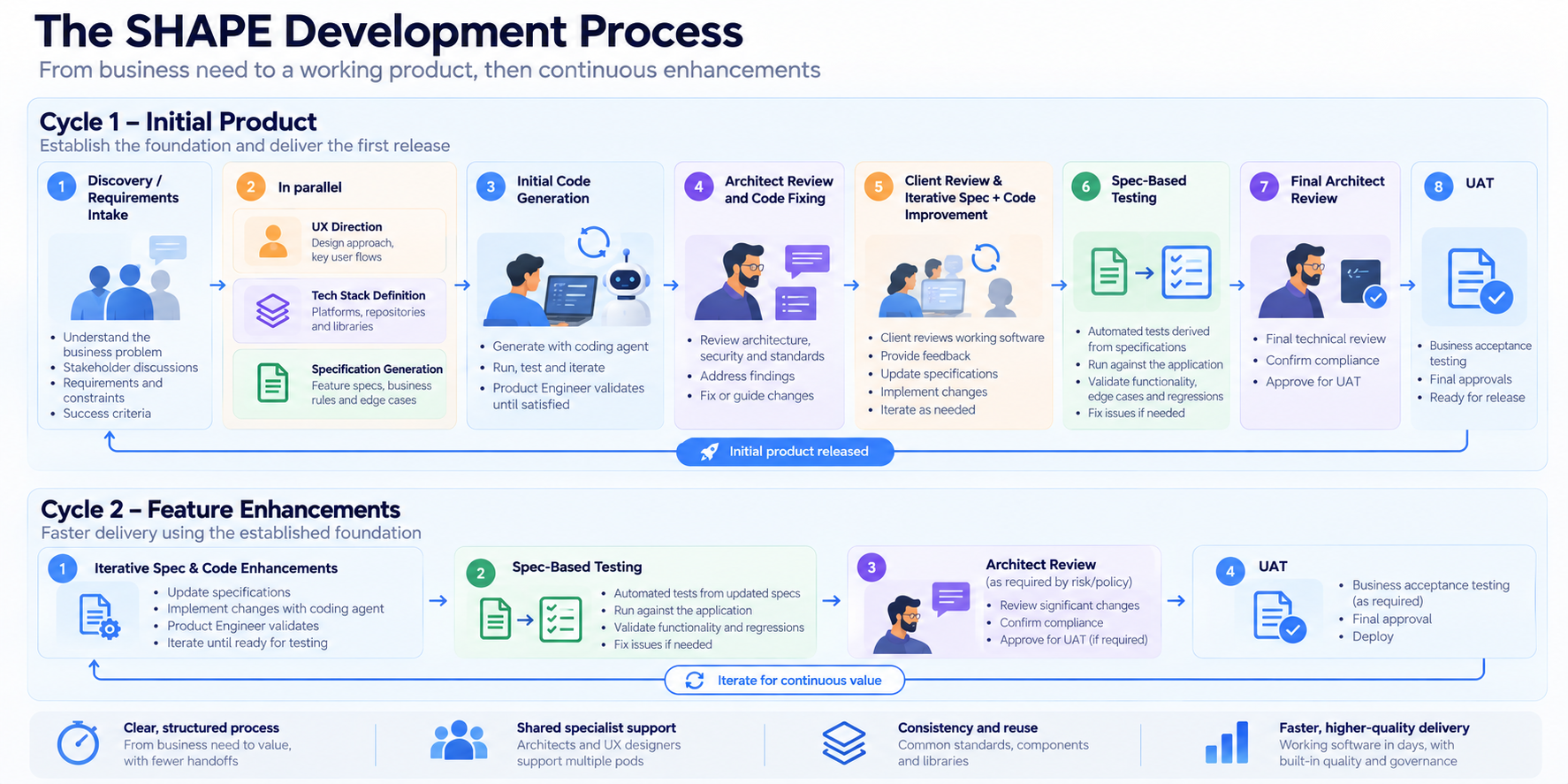
Two cycles, one product model
The SHAPE Framework distinguishes between building a product for the first time and enhancing an existing product that already has an established architecture, design direction, repository, and specifications. Both cycles remain human-led and specification-driven, but the initial cycle includes more setup and technical validation.
Cycle 1: Initial development
The first development cycle has eight stages:
- Discovery and requirements intake.
- Parallel UX direction, specification generation, and technical foundation work, including Architecture Readiness Review before implementation.
- Initial agent implementation with Product Engineer iteration.
- Initial architect review and corrections.
- Business stakeholder review and iterative changes.
- Independent Spec-Based Testing.
- Final architect review and technical sign-off.
- User Acceptance Testing under the organization's established process.
The order is deliberate without requiring a rigid waterfall interpretation. Within Stage 2, the architect reviews initial specifications and the technical foundation through Architecture Readiness Review, producing a ready-to-code repository before Stage 3. Specifications and working behavior evolve during implementation and stakeholder review. The initial architect review prevents serious technical problems from being compounded; the final review confirms the implementation after feedback and independent verification.
Cycle 2: Enhancements
Once the initial foundation exists, later change follows four stages:
- Product Engineer-led specification and code enhancement.
- Independent Spec-Based Testing.
- Architect review when required by risk or enterprise policy.
- UAT.
A change that fundamentally alters the technical architecture may require additional work resembling the initial cycle. The short cycle is not permission to bypass the enterprise's controls.
What the cycles share
In both cycles, the specification corpus is maintained, implementation is constrained by approved assets and technically enforced permissions, and the Product Engineer coordinates resolution of problems. Separate verification checks the product against expected behavior. Business stakeholders retain the ability to accept or reject the result.
Where the process ends
The SHAPE development process ends at UAT. The enterprise's normal release, deployment, production operations, and service practices take over afterward. The Product Engineer remains the long-term owner and may initiate a new enhancement cycle when changes are needed.